US Deportations to CECOT: Venezuelan Prisoners and Their Stories
The landscape of international migration and detention has taken a complex and concerning turn with the unprecedented removal of hundreds of Venezuelan individuals from the United States to El Salvador. Rather than returning them to their home country, the U.S. government has opted to send these individuals to El Salvador's notorious Centro de Confinamiento del Terrorismo (CECOT) mega-prison, a facility synonymous with President Nayib Bukele's stringent anti-gang crackdown. This development raises critical questions about human rights, international cooperation, and the fate of those who find themselves caught in this geopolitical maneuver. For many, the prospect of being
el salvador imprisoned under such conditions, often without clear charges, represents a bewildering and terrifying ordeal.
The Unprecedented Transfer: US Deportations to El Salvador
In a move that has drawn significant scrutiny, at least 238 Venezuelans were deported from the U.S. and subsequently imprisoned in El Salvador's CECOT facility. What makes this particular transfer especially contentious is the admission by the U.S. government itself that a substantial number of these individuals had no discernible criminal records. This immediately casts a shadow over the ethical implications of the deportations, questioning the rationale behind sending non-criminals into a maximum-security prison designed for violent gang members.
The events surrounding these transfers were brought to light through various channels. A U.S. photojournalist was on the ground, capturing compelling images at both the airport upon arrival and later at the prison, documenting the processing of these Venezuelan detainees. These images provided a rare glimpse into the harsh realities facing the deportees. Further details emerged when CBS News reportedly obtained a leaked list containing the names of all the Venezuelans sent to El Salvador. Such transparency, albeit through unofficial channels, highlights the significant public interest and concern surrounding these operations. The decision to deport individuals, some without criminal records, to a country known for its extreme detention measures, rather than to Venezuela or another suitable destination, has yet to be fully explained. It suggests complex diplomatic arrangements or strategic imperatives between the U.S. and El Salvador, potentially bypassing established norms for migrant processing and human rights protections for those now
el salvador imprisoned.
Life Inside CECOT: A Glimpse into El Salvador's Mega-Prison
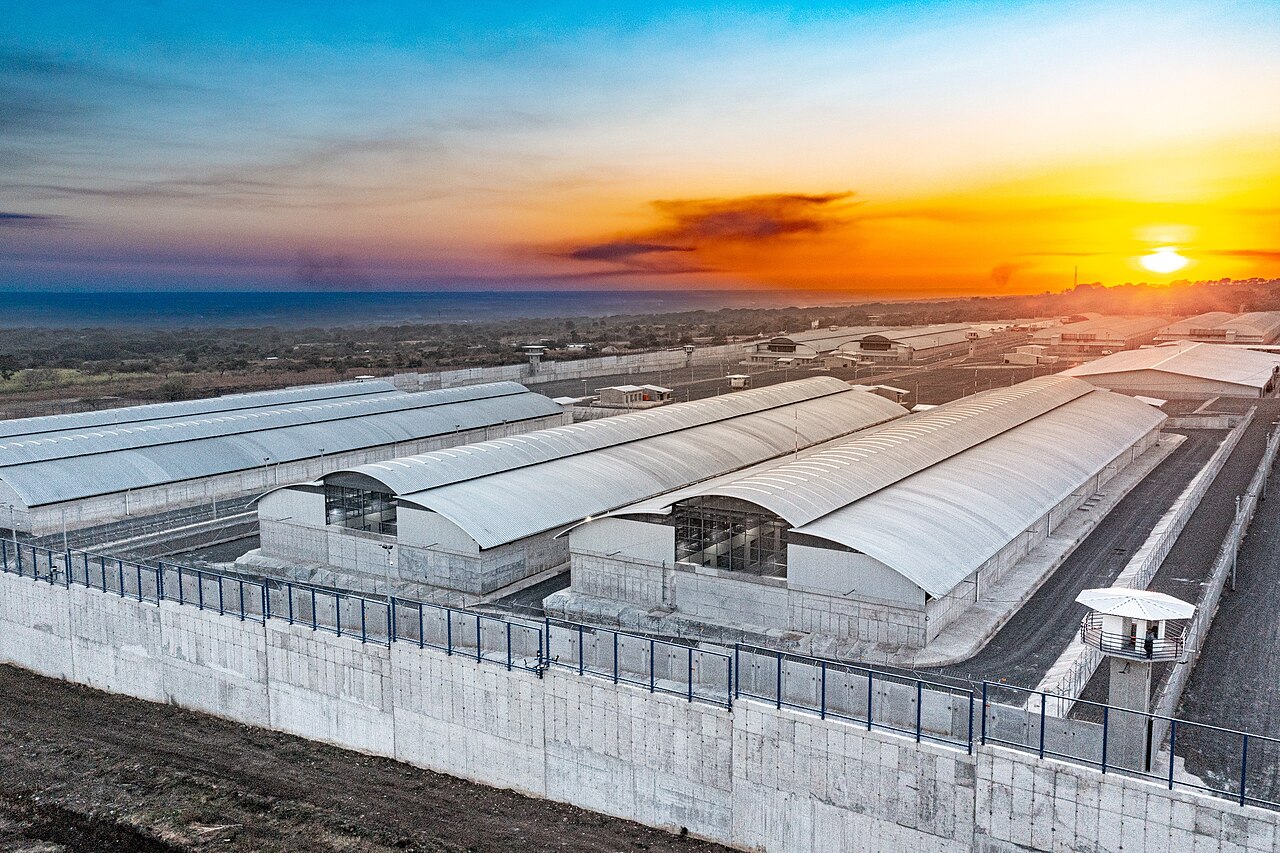
For those deported from the U.S., their new reality is life within CECOT, a sprawling facility designed to house tens of thousands of alleged gang members. This prison is the cornerstone of President Nayib Bukele's "war on gangs," a campaign characterized by an emergency regime that has suspended numerous constitutional rights. Under this regime, the conditions for individuals
el salvador imprisoned are exceptionally harsh. Prison authorities, following Bukele's directives, have enforced "maximum emergency" in all security prisons, ordering "all cells closed 24/7." This translates to a brutal existence where inmates "won’t be able to see a ray of sunshine," effectively cutting them off from the outside world and basic human interaction.
The implications for the Venezuelan deportees, many of whom are not alleged gang members, are dire. They are being subjected to a system built for the country's most dangerous criminals, facing extreme isolation and a complete lack of constitutional guarantees. The state of emergency, which allows for extended administrative detention of up to 15 days (compared to the usual 72 hours), and the suspension of the right to defense, freedom of assembly, and inviolability of correspondence, means that those held within CECOT have minimal avenues for legal recourse or communication with the outside world. Even the prohibition on telecommunications intervention without judicial authorization has been suspended, creating an environment ripe for surveillance and potential abuse. This punitive environment, designed to break the will of gang members, presents a profound challenge to the mental and physical well-being of the Venezuelan deportees. Their categorization as "suspicious" individuals under the emergency decree can lead to indefinite detention without the due process typically afforded in democratic societies.
El Salvador's Broader Security Crackdown: Context for Detention
The arrival of Venezuelan deportees into El Salvador coincides with – and is deeply impacted by – the country's ongoing state of emergency. President Bukele initiated this exceptional regime in response to an "excessive increase" in murders, particularly a single day in March 2022 that saw 62 homicides, making it the deadliest day in recent Salvadoran history. To combat this surge in violence, Congress swiftly approved Bukele's request to apply an emergency regime, suspending key constitutional rights.
Among the fundamental rights suspended are freedom of assembly and association, the right to defense, and the inviolability of correspondence. Furthermore, the ban on intervening in telecommunications without judicial authorization was lifted, and the period of administrative detention was extended from 72 hours to 15 days. These sweeping measures, implemented by the Ministry of Security, the National Civil Police, and the Ministry of Defense, have granted authorities immense power to crack down on suspected gang members and their networks.
While these measures are explicitly aimed at local gangs, their broad application creates a perilous environment for anyone
el salvador imprisoned, regardless of their alleged affiliation. For the Venezuelan deportees, who are foreign nationals and in many cases without criminal backgrounds, being placed within this system raises significant human rights concerns. They are subjected to the same draconian conditions and lack of due process as individuals accused of serious gang offenses, despite the U.S. government's acknowledgment of their non-criminal status. This context highlights the immense challenges faced by anyone detained under Bukele's emergency powers, making access to legal aid, consular services, and simply proving one's innocence incredibly difficult.
To understand the full scope of these measures, further reading on El Salvador's security policies is essential. For more detailed information on the isolation practices within prisons, refer to
Bukele's Emergency Regime: El Salvador Isolates Imprisoned Gangs. Additionally, insights into the broader impact of suspended rights can be found in
El Salvador's Rights Suspension: Bukele's Crackdown on Gang Homicides.
The Human Cost: Stories from Venezuelan Families
Beyond the legal and political complexities, the most poignant aspect of these deportations lies in the human stories. Venezuelan families, scattered and often desperate, have begun to share the harrowing accounts of their loved ones now
el salvador imprisoned. These narratives often speak of confusion, fear, and a profound sense of injustice. Many families report that their relatives had sought refuge or economic opportunity in the U.S., only to be abruptly deported to an unfamiliar country with one of the harshest penal systems in the world.
The lack of clarity regarding charges, the absence of due process, and the extreme isolation in CECOT create immense psychological distress for both the deportees and their families. Families struggle with limited information, fearing for the safety and well-being of their loved ones in a system designed for maximum incapacitation. The leaked names, while confirming the identities of some, do little to alleviate the anguish of families who are desperate for communication or legal assistance. The ethical dilemma is stark: how can individuals, many with no criminal background, be subjected to conditions typically reserved for hardened criminals? This situation underscores the critical need for robust international oversight, consular access, and human rights advocacy to ensure that due process is respected, and that individuals are not unfairly punished due to geopolitical arrangements or domestic security crackdowns. The long-term psychological and social consequences for these individuals and their families are likely to be profound, adding another layer of tragedy to Venezuela's ongoing crisis.
Conclusion
The deportation of Venezuelan individuals from the U.S. to El Salvador's CECOT prison represents a deeply troubling intersection of migration policy, security crackdowns, and human rights concerns. The admission that many of these deportees had no criminal records, combined with their placement in a facility operating under a state of emergency with suspended constitutional rights, raises serious ethical questions for both the U.S. and El Salvador. The plight of those now
el salvador imprisoned underscores the critical importance of transparency, due process, and adherence to international human rights standards. As these stories continue to emerge, they serve as a powerful reminder of the human cost when individuals become pawns in larger geopolitical strategies, highlighting the urgent need for greater accountability and compassion in migration and detention practices worldwide.